
Welcome to another practical lesson at QBT English! If you have ever traveled abroad, visited an upscale international restaurant, or simply wanted to enjoy a fine-dining experience in your home city, you know how important it is to communicate clearly. Knowing how to order food at a restaurant in English is a crucial life skill for anyone learning the language. From greeting the host and reading the menu to asking questions about ingredients and requesting the final bill, every step requires specific phrases.
In this comprehensive guide, we will break down the entire dining-out process into easy, manageable steps. Along the way, you will learn essential restaurant English phrases with Urdu meanings, study real-life conversational dialogues between customers and waiters, discover common mistakes to avoid, and test your knowledge with a 10-question practice quiz. Let us dive in and build your confidence for your next restaurant visit!
Learning Goals for This Lesson
By the end of this detailed QBT English lesson, you will be able to:
- Make table reservations over the phone or in person with correct etiquette.
- Understand and use standard menu vocabulary like appetizers, main courses, and desserts.
- Ask the waiter for recommendations or inquire about dietary restrictions using natural English phrases.
- Place your lunch or dinner order smoothly without hesitation.
- Request the bill, handle tipping, and express satisfaction or complaints politely.
Step 1: Arriving and Making a Table Reservation
Your dining experience begins the moment you walk through the restaurant doors or call ahead for a table. If the restaurant is popular, you might need to reserve a table in advance or check in with the host upon arrival.
Useful Phrases for Reservations and Arrival
- "I’d like to book a table for two for tonight at 8 PM, please."
(میں آج رات 8 بجے دو افراد کے لیے میز بک کروانا چاہتا ہوں۔) - "Do you have a table available for four people?"
(کیا آپ کے پاس چار لوگوں کے لیے کوئی میز خالی ہے؟) - "We have a reservation under the name Ali."
(ہماری علی کے نام سے بکنگ ہے۔) - "Could we sit by the window, please?"
(کیا ہم کھڑکی کے پاس بیٹھ سکتے ہیں، براہ کرم؟) - "How long is the waiting list?"
(انتظار کی فہرست کتنی طویل ہے؟ / کتنا انتظار کرنا پڑے گا؟)
Step 2: Reading the Menu and Asking for Recommendations
Once you are seated, the waiter will usually hand you the menu and ask for your drink order. Understanding menu sections helps you navigate food choices effortlessly.
Common Menu Vocabulary
| English Term | Urdu Meaning | Description |
|---|---|---|
| Appetizer / Starter | آغازیہ / کھانے سے پہلے کی ہلکی غذا | Small dishes served before the main meal. |
| Main Course | مرکزی کھانا | The primary, largest dish of the meal. |
| Side Dish | سائیڈ ڈش / اضافی چیز | Smaller portions served alongside the main dish (e.g., fries, salad). |
| Beverage | مشروب | Drinks such as water, juice, soda, or tea. |
| Dessert | میٹھی ڈش / مٹھائی | Sweet food eaten at the end of a meal. |
Phrases to Ask for Help or Recommendations
- "Could you recommend a specialty of the house?"
(کیا آپ یہاں کی کوئی خاص ڈش تجویز کر سکتے ہیں؟) - "What is in this dish?"
(اس ڈش میں کیا کیا چیزیں شامل ہیں؟) - "Is this dish very spicy?"
(کیا یہ ڈش بہت زیادہ مصالحے والی / تکی ہے؟) - "Do you have any vegetarian options?"
(کیا آپ کے پاس سبزی خوروں کے لیے کوئی کھانے موجود ہیں؟) - "I am allergic to nuts. Does this contain any?"
(مجھے نٹس سے الرجی ہے۔ کیا اس میں نٹس ہیں؟)
Step 3: Ordering Food and Drinks
When you are ready, the waiter will return to take your order. This is where your english speaking practice for restaurant settings truly shines. Speak clearly and use polite modal verbs like "I would like" or "Could I have" instead of direct commands.
Key Sentences for Ordering
- "I would like to start with the tomato soup, please."
(میں ٹماٹر کے سوپ سے آغاز کرنا چاہوں گا، براہ کرم۔) - "For my main course, I’ll have the grilled chicken with mashed potatoes."
(اپنے مرکزی کھانے کے لیے، میں میش کیے ہوئے آلو کے ساتھ گریلڈ چکن لوں گا۔) - "Could you bring us a bottle of sparkling water?"
(کیا آپ ہمیں چمکدار پانی (سوڈا واٹر) کی ایک بوتل لا سکتے ہیں؟) - "Can I substitute the French fries for a green salad?"
(کیا میں فرینچ فرائز کی جگہ سبز سلاد لے سکتا ہوں؟) - "That is all for now, thank you."
(ابھی کے لیے بس اتنا ہی، شکریہ۔)
Step 4: Real-Life Restaurant Dialogue
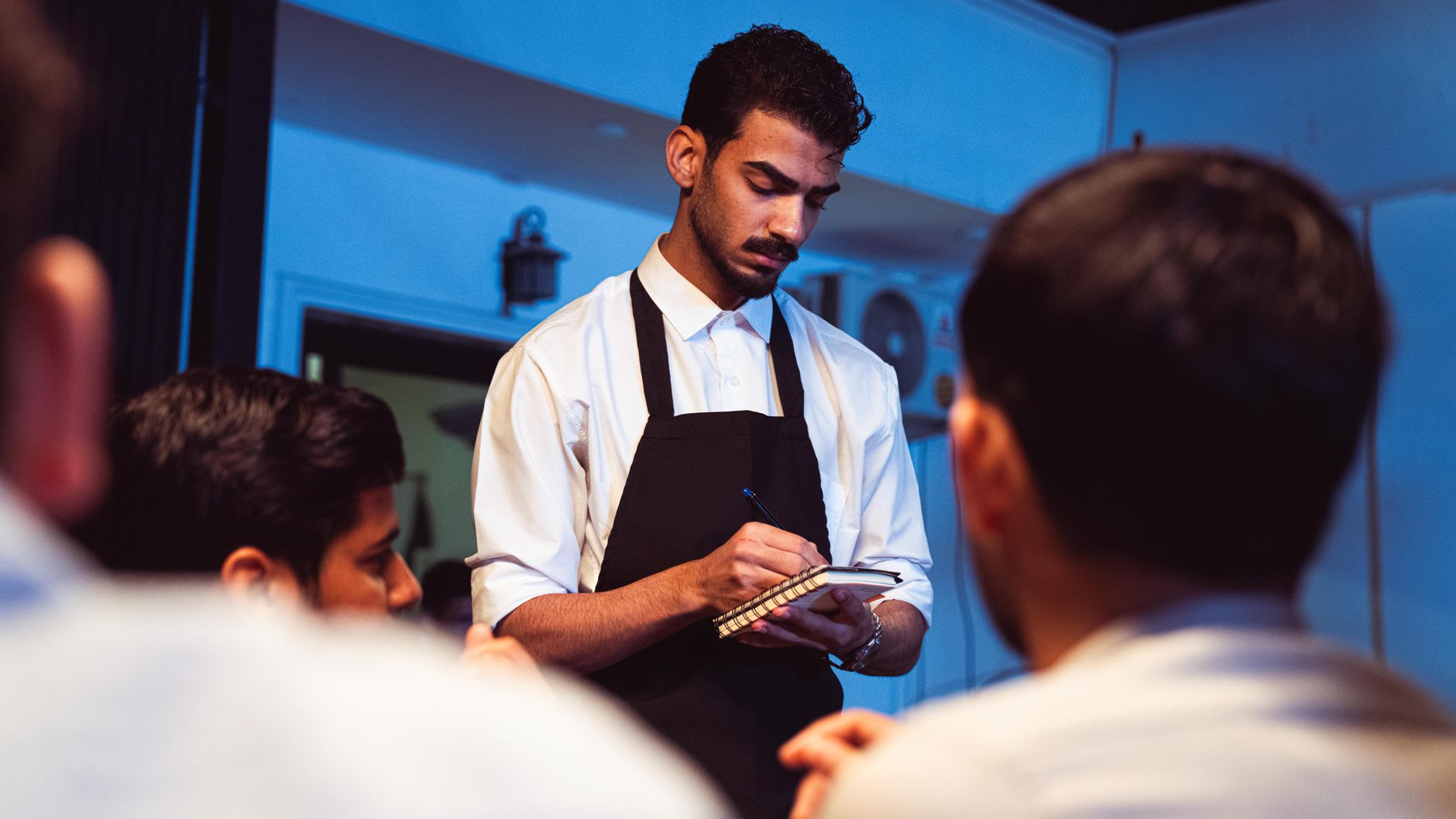
To see how these phrases work together in a natural setting, let us read a complete dialogue between a customer (Sarah) and a waiter at a casual dining restaurant.
Waiter: Good evening! Welcome to The Golden Spoon. Do you have a reservation?
(ویٹر: خوش آمدید! دی گولڈن سپون میں خوش آمدید۔ کیا آپ کی کوئی بکنگ ہے؟)
Sarah: Good evening. No, I don’t. A table for one, please.
(سارہ: شب بخیر۔ نہیں، میری کوئی بکنگ نہیں۔ ایک فرد کے لیے میز چاہیے، براہ کرم۔)
Waiter: Right this way, please. Here is your menu. Can I get you something to drink while you look at it?
(ویٹر: اس طرف تشریف لائیں۔ یہ رہا آپ کا مینو۔ کیا جب تک آپ مینو دیکھیں، میں آپ کے لیے پینے کی کوئی چیز لے آؤں؟)
Sarah: Yes, please. Just a glass of fresh lemonade with no ice.
(سارہ: جی ہاں، براہ کرم۔ بس تازہ لیموں پانی کا ایک گلاس بغیر برف کے۔)
Waiter: Sure. I will be right back with your lemonade. Are you ready to order food, or do you need a few more minutes?
(ویٹر: بالکل۔ میں ابھی آپ کا لیموں پانی لے کر آتا ہوں۔ کیا آپ کھانا آرڈر کرنے کے لیے تیار ہیں، یا آپ کو چند مزید منٹ چاہیے؟)
Sarah: I’m ready. For the starter, I would like the garlic mushrooms. And for the main course, I'll have the mushroom pasta.
(سارہ: میں تیار ہوں۔ آغاز کے طور پر، میں گارلک مشرومز چاہتی ہوں۔ اور مرکزی کھانے کے لیے، میں مشروم پاستا لوں گی۔)
Waiter: Excellent choice. Would you like any dressing on your pasta – creamy white sauce or tomato marinara?
(ویٹر: بہترین انتخاب۔ کیا آپ اپنے پاستا پر کوئی ساس پسند کریں گی – کریمی سفید ساس یا ٹماٹر مرینارا؟)
Sarah: Creamy white sauce, please. And make sure it is not too hot or spicy.
(سارہ: کریمی سفید ساس، براہ کرم۔ اور یہ یقینی بنائیں کہ یہ زیادہ گرم یا تیکھی نہ ہو۔)
Waiter: Noted. Your food will be served in about twenty minutes. Enjoy your meal!
(ویٹر: نوٹ کر لیا گیا۔ آپ کا کھانا تقریباً بیس منٹ میں پیش کر دیا جائے گا۔ آپ کے کھانے سے لطف اندوز ہوں!)
Step 5: During the Meal and Making Requests
Sometimes you need extra items while eating—like more napkins, extra salt, or a refill of water. Here is how you can politely grab the waiter's attention and express your needs.
- "Excuse me, could we get some extra napkins, please?"
(معذرت، کیا ہمیں کچھ اضافی نیپکن مل سکتے ہیں؟) - "Could you pass the salt and pepper?"
(کیا آپ نمک اور کالی مرچ آگے بڑھا سکتے ہیں؟) - "Everything is delicious, thank you!"
(ہر چیز بہت مزیدار ہے، شکریہ!) - "Excuse me, my steak is a bit undercooked. Could you grill it a bit more?"
(معذرت، میری اسٹیک تھوڑی کچی ہے۔ کیا آپ اسے تھوڑا اور پکا سکتے ہیں؟)
Step 6: Asking for the Bill and Tipping
When you finish your meal, you will need to ask for the bill (also known as the check in American English) and handle payment.
Phrases for Billing and Payment
- "Could we have the check / bill, please?"
(کیا ہمیں بل مل سکتا ہے، براہ کرم؟) - "Do you accept credit cards, or is it cash only?"
(کیا آپ کریڈٹ کارڈ قبول کرتے ہیں، یا صرف نقد رقم لی جاتی ہے؟) - "Can we split the bill?"
(کیا ہم بل آپس میں تقسیم (آدھا آدھا) کر سکتے ہیں؟) - "Keep the change."
(باقیپیسے اپنے پاس رکھ لیں / بقایا ٹپ کے طور پر رکھ لیں۔) - "Thank you, the service was wonderful."
(شکریہ، سروس بہت شاندار تھی۔)
If you enjoy exploring practical everyday communication like this, you will also love checking out our guide on English Conversation at the Market: Shopping and Bargaining with Urdu Translation to enhance your vocabulary further.
Common Mistakes to Avoid at a Restaurant
Even advanced learners sometimes make simple linguistic mistakes when dining out. Keep these tips in mind:
- Using Direct Imperatives: Avoid saying "Give me water" or "Bring the menu." It sounds rude in English culture. Instead, use polite modals: "Could I have water, please?"
- Confusing Bill and Check: In British English, people usually say "bill", while in American English, people commonly say "check". Both are widely understood.
- Mispronouncing Menu Words: Words borrowed from French (like buffet, hors d'oeuvre, or menu) have distinct pronunciations. Practice saying them out loud to avoid confusion.
- Forgetting Dietary Needs: If you have severe food allergies, do not guess ingredients. Always ask the server directly to verify with the chef.
- Q1: B (Appetizer)
- Q2: C (Could you bring me the menu, please?)
- Q3: A (The bill, please.)
- Q4: B (Can we split the bill?)
- Q5: C (Dessert)
- Q6: B (Excuse me, this dish is a bit too spicy for me.)
- Q7: C (Check)
- Q8: B (Keep the change.)
- Q9: A (We have a reservation under the name Ahmed.)
- Q10: B (Because it sounds polite and respectful in English conversation.)
- Navigate the City: Essential English Phrases for Asking and Giving Directions with Urdu Translation
- How to Talk About Future Plans and Dreams in English with Urdu Translation
- Expressing Feelings and Emotions in English: How to Talk About Your Mood with Urdu Translation
Practice Quiz: Test Your Restaurant English Skills
Let us check how well you mastered today’s lesson. Answer the following 10 questions, then check your answers at the bottom.
Q1: What do you call the small dish served before the main course?
A) Dessert
B) Appetizer
C) Beverage
D) Side dish
Q2: Which phrase is the most polite way to ask for a menu?
A) Give me the menu now.
B) I want the menu.
C) Could you bring me the menu, please?
D) Menu, bring it here.
Q3: What does the Urdu phrase "بل براہ کرم" translate to in English?
A) The bill, please.
B) Good morning.
C) Where is the table?
D) Thank you very much.
Q4: If you want to share the cost of the meal with your friend, what do you say?
A) Keep the change.
B) Can we split the bill?
C) This is on me.
D) Is service included?
Q5: Which term refers to sweet food eaten at the end of a meal?
A) Starter
B) Main course
C) Dessert
D) Beverage
Q6: How do you politely tell the waiter that your food is too spicy?
A) This food is terrible.
B) Excuse me, this dish is a bit too spicy for me.
C) Take this away immediately.
D) I hate spicy food.
Q7: What is another common American English word for "bill"?
A) Ticket
B) Receipt
C) Check
D) Invoice
Q8: What should you say if you want to leave the remaining small money as a tip?
A) Split the bill.
B) Keep the change.
C) Bring the menu.
D) Charge my card.
Q9: Which sentence is correct if you have a table reservation?
A) We have a reservation under the name Ahmed.
B) I am reservation four people.
C) Table reservation for me is.
D) Give me a booked table.
Q10: Why is it important to use polite modal verbs like "Could I..." in a restaurant?
A) Because waiters will not serve you otherwise.
B) Because it sounds polite and respectful in English conversation.
C) Because direct sentences are illegal.
D) Because it is faster.
Quiz Answer Key
Lesson Summary
Mastering restaurant conversations in English opens up a world of comfort and confidence when dining out. By practicing table reservations, understanding menu vocabulary, placing orders politely, and knowing how to handle the bill, you ensure a pleasant experience for both yourself and your server. Keep reviewing these phrases, practice speaking them out loud, and apply them during your next culinary adventure. For more lessons on everyday spoken English, continue exploring QBT English resources!
Continue Learning with QBT English
Keywords: restaurant english conversation in urdu, how to order food in english, restaurant english phrases with urdu, english conversation at a restaurant, menu vocabulary in english and urdu, asking for the bill in english, english speaking practice for restaurant, table reservation english sentences, food ordering dialogues in english, common restaurant phrases for beginners, waiter and customer conversation in english, ordering lunch or dinner in english, restaurant vocabulary with urdu meanings
Comments
Post a Comment